Hurricane season is a time to secure roofs, protect windows, trim trees, and gather emergency supplies.
One important asset is often overlooked until the storm has passed: the HVAC system.
Whether serving a home, a hotel, an office, or a healthcare facility, an HVAC system represents a significant investment. A few simple checks before and after a hurricane can help reduce unnecessary damage and improve long-term reliability.
Before the Storm
Confirm the Outdoor Unit Is Still Secure
A properly installed outdoor unit should already be securely anchored to its mounting brackets or concrete pad. Routine maintenance should include checking anchor bolts, supports, and mounting hardware for corrosion or loosening.
Before hurricane season, take a moment to visually confirm that the unit remains firmly secured and shows no obvious signs of movement or deterioration.
Reduce the Risk of Flying Debris
Outdoor units are designed to reject heat, not withstand impacts.
Loose branches, outdoor furniture, construction materials, and galvanized roofing sheets can become airborne during high winds, damaging condenser coils, refrigerant piping, fan guards, and electrical components.
Whenever it is safe to do so, secure or remove loose objects around the property before a storm arrives.
After the Storm
Salt Exposure Continues After the Storm
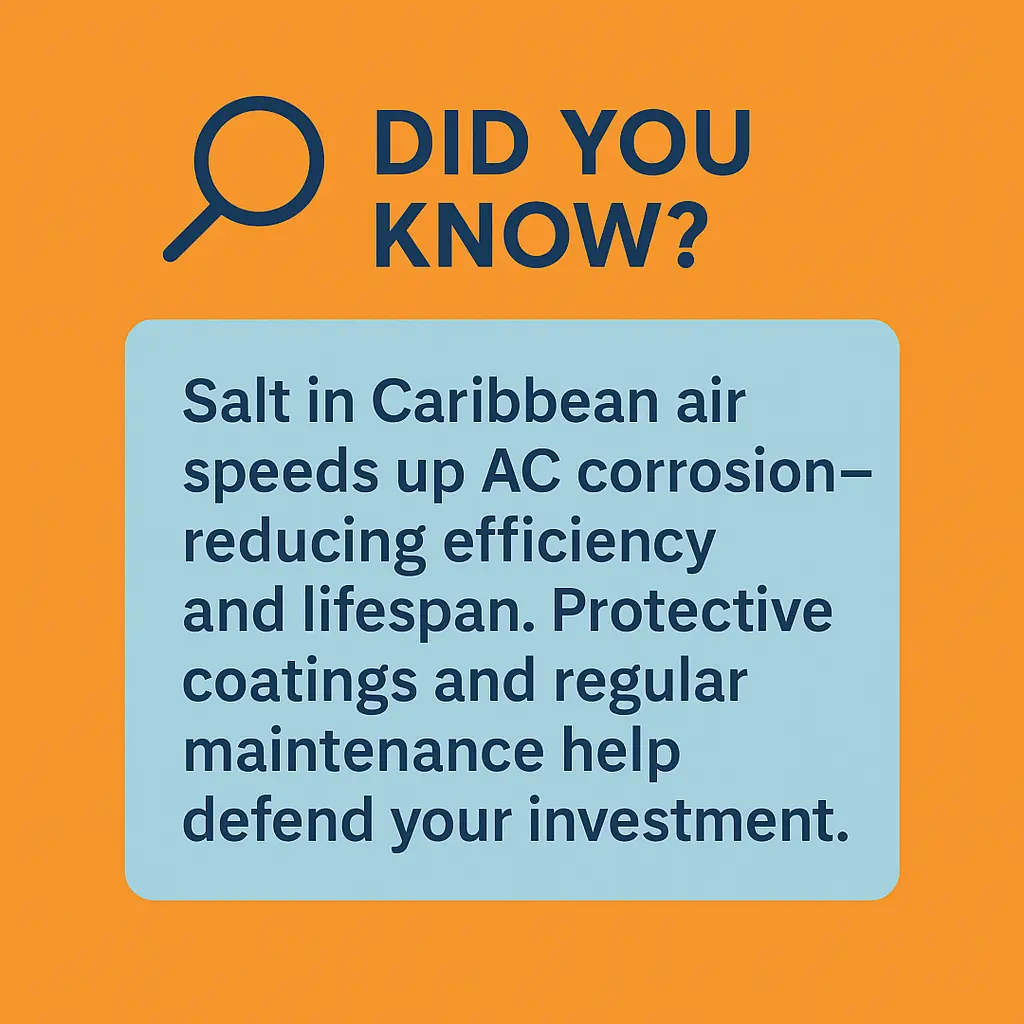
Hurricanes often carry salt well beyond the coastline.
Even when an outdoor unit appears undamaged, salt deposits can remain on condenser coils, electrical connections, and exposed metal components, accelerating corrosion long after the weather has cleared.
Once conditions are safe, gently rinse the outdoor unit with fresh water. Avoid using high-pressure water, which may damage delicate coil fins or force water into electrical components.
Floodwater Requires Professional Inspection
If floodwater has reached the outdoor unit or any indoor HVAC electrical equipment, do not restore power immediately.
Floodwater can contaminate motors, controls, contactors, sensors, and electronic circuit boards. Damage is not always visible.
Any system exposed to flooding should be inspected before being returned to service.
Allow the Electrical Supply to Stabilize
Power restoration after a hurricane is rarely immediate or perfectly stable.
Allow the electrical supply to settle before restarting the HVAC system. Where practical, surge protection provides additional protection for compressors and electronic controls.
Restore Normal Airflow
Before restarting the system, make sure the outdoor unit is free from branches, galvanized roofing sheets, tarpaulins, plywood, plastic sheeting, or any other material that could restrict airflow.
If the outdoor unit is enclosed for aesthetic or security reasons, confirm that the enclosure remains intact and maintains the clearances recommended by the manufacturer. Restricting airflow can reduce performance, increase energy consumption, and place unnecessary strain on the equipment.
Inspect Beyond the Obvious
Not all hurricane damage is immediately visible.
Inspect the system for:
- Bent condenser fins
- Damaged refrigerant pipe insulation
- Loose electrical conduit or exposed wiring
- Shifted equipment or mounting brackets
- Early signs of corrosion on exposed metal
- Condensate drain blockages that could cause the indoor drain pan to overflow
Addressing small issues early often prevents larger repairs later.
Protecting your HVAC Investment
No outdoor HVAC system is immune to hurricane-force conditions, but proper installation, routine maintenance, and careful post-storm inspection can significantly improve resilience.
Where outdoor units are protected by an enclosure, it should be designed to shield the equipment from wind-driven debris without restricting the airflow required by the manufacturer.
Preparing before the storm and inspecting carefully afterward helps protect one of the building's most valuable mechanical investments and improves the likelihood of reliable operation throughout the hurricane season.
P.S. During the storm, Stay safe. Protect life first. Everything else can wait.