The way Caribbean businesses evaluate air-conditioning systems is changing.
A few years ago, the conversation often began and ended with the purchase price. Today, rising operating costs, increasing environmental exposure, and greater dependence on reliable cooling are encouraging organizations to take a broader view.
Whether operating a hotel, office, restaurant, healthcare facility, or retail space, these three trends are reshaping commercial HVAC decisions across the region.
1. Businesses Are Beginning to Think Like Owners, Not Buyers
For many years, HVAC decisions were driven largely by one number: the price on the quotation.
Today, more organizations are asking a different question:
What will this system cost to own over the next ten or fifteen years?
That single question changes the conversation.
According to the U.S. Department of Energy, heating and cooling typically account for 35% to 40% of the energy consumed in commercial buildings. When cooling represents one of a facility's largest operating expenses, the purchase price becomes only one part of the financial picture.
This reflects a principle long promoted by ASHRAE, which encourages evaluating HVAC systems using Life-Cycle Cost Analysis (LCCA). Rather than considering only the initial investment, LCCA evaluates the total cost of ownership, including:
- Energy consumption
- Preventive maintenance
- Repairs
- Equipment replacement
- Operational reliability
The lowest quotation and the lowest cost of ownership are rarely the same thing.
Across the Caribbean, more businesses are beginning to evaluate HVAC systems as long-term investments rather than short-term purchases.
2. Reliability Has Become a Business Priority
Air conditioning is no longer viewed simply as a comfort system.
For many organizations, it supports daily operations.
Hotels rely on it to maintain guest comfort. Offices depend on it to provide productive working environments. Healthcare facilities protect patients and sensitive equipment. Server rooms require stable temperatures to support critical technology.
When cooling systems fail, the cost extends well beyond the repair itself.
Lost productivity, interrupted operations, dissatisfied customers, and unplanned downtime all carry financial consequences.
As a result, many organizations are placing greater emphasis on:
- Preventive maintenance
- Proper system commissioning
- Routine inspections
- Long-term service partnerships
Reliability is becoming part of business continuity rather than simply a maintenance concern.
3. Caribbean Conditions Are Influencing Equipment Decisions
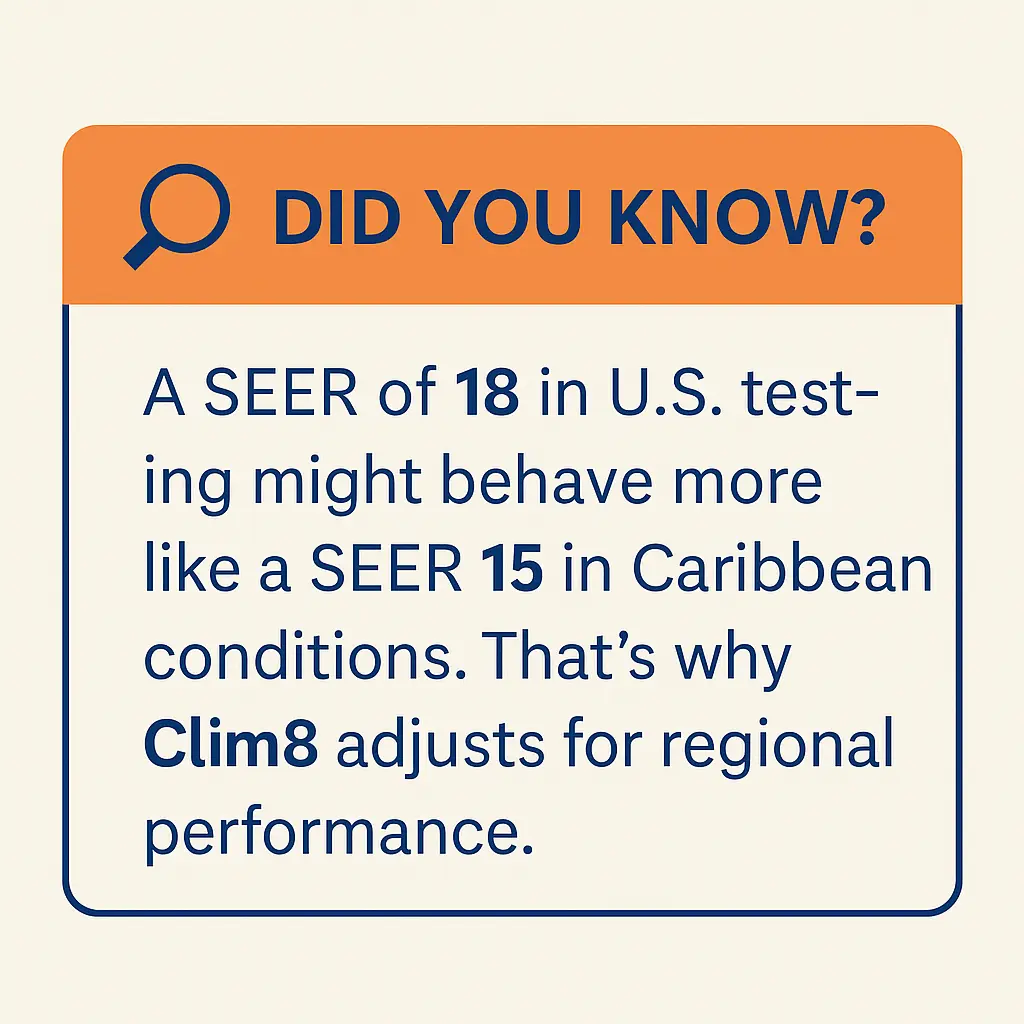
HVAC systems in the Caribbean operate under conditions that differ significantly from many standard testing environments.
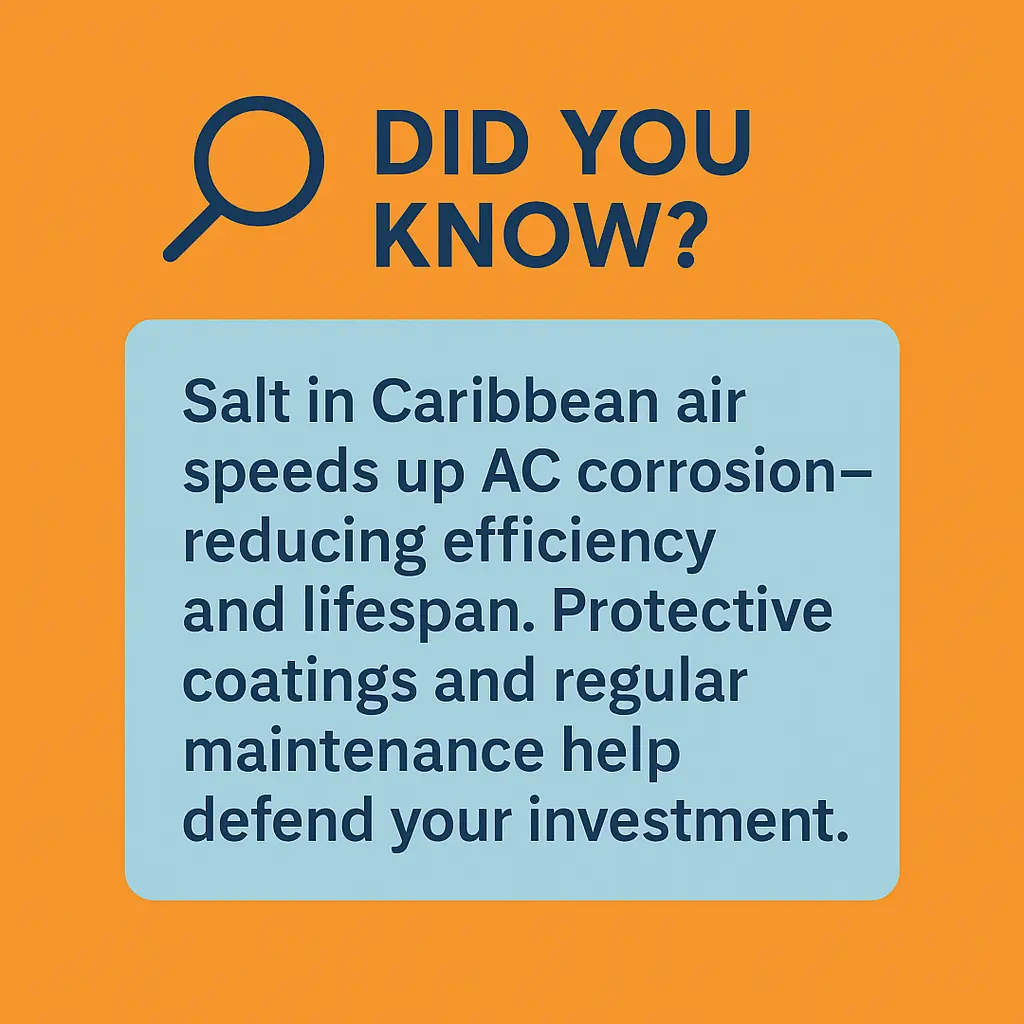
High humidity, year-round cooling demand, salt-laden air, hurricanes, and fluctuating electrical supply all influence equipment performance and service life.
Organizations are responding by paying closer attention to:
- Corrosion resistance
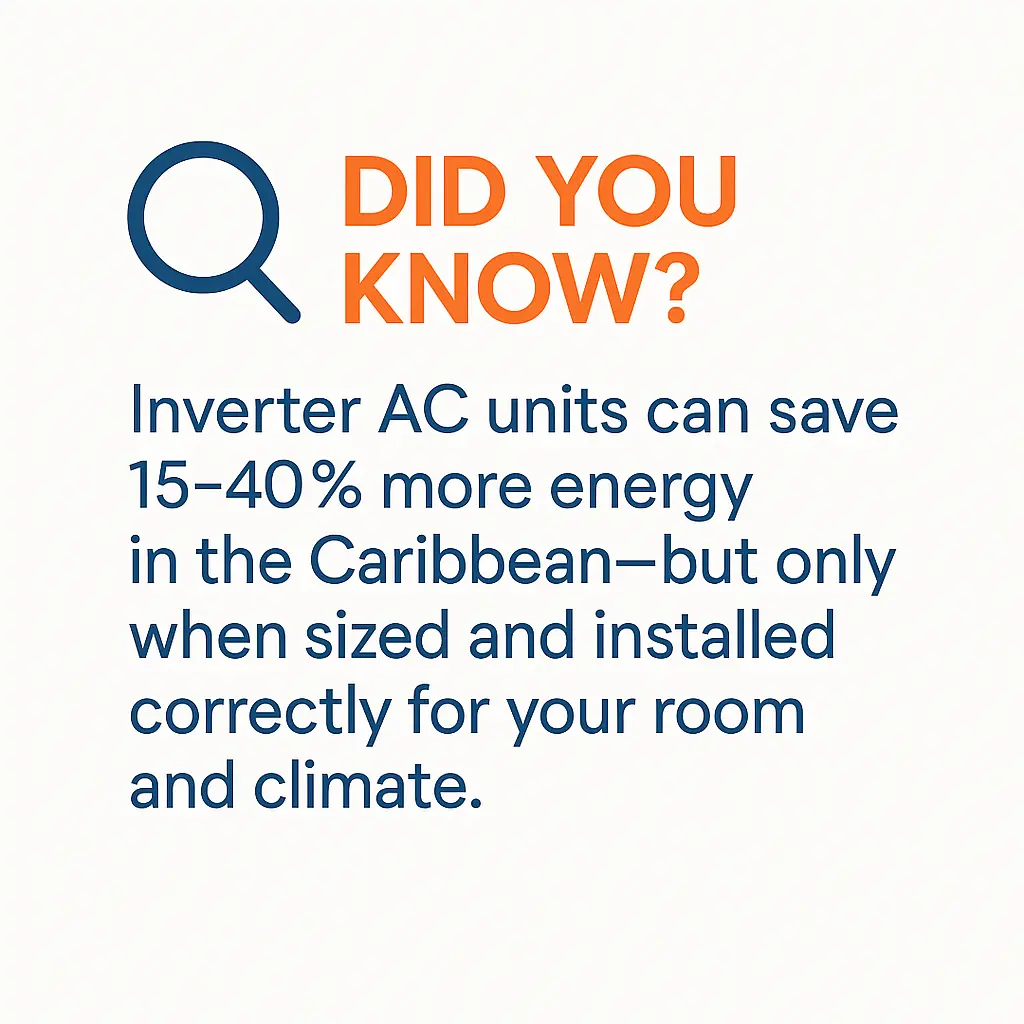
- Proper equipment sizing
- Surge protection
- Installation quality
- Hurricane resilience
- Preventive maintenance planning
Increasingly, the question is no longer simply "Which system should we install?"
It has become:
"Which system is best suited to the environment in which it will operate?"
Looking Ahead
Technology will continue to evolve, but the most significant HVAC trend shaping Caribbean businesses in 2026 is not a new piece of equipment.
It is a different way of making decisions.
Organizations are increasingly evaluating HVAC systems by how they perform over years of ownership rather than on the day they are purchased.
For Caribbean businesses, that shift is leading to more resilient buildings, more predictable operating costs, and cooling systems designed to support long-term success.